Striped for Strength: Adhesion Geometry in Modern Facades

Façades Under Pressure
Australian façades experience some of the most adverse and diverse conditions in the world. What is perfect for the tropical north is a disaster for the alpine south. However, one thing remains consistent across all Australian façades – Pressure.
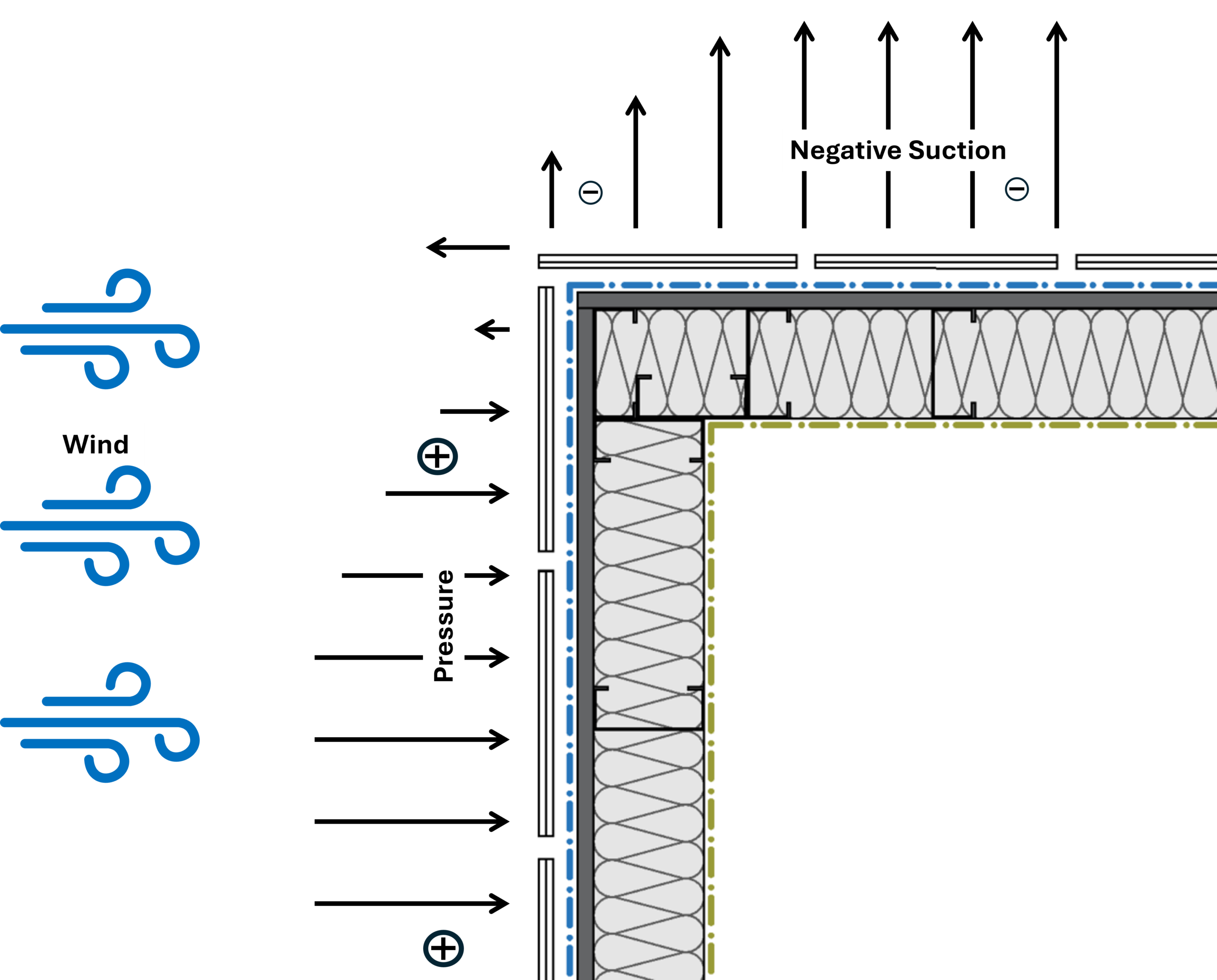
As wind loading acts on the structure, positive pressure builds on windward surfaces, while negative pressure forms around corners, junctions and leeward faces of the façade (Figure 1). This negative suction force pulls outward on the façade and place significant stress on the weatherproofing system. Understanding and designing façades that consider weathertightness under both negative and positive pressure loads is critical to the longevity and success of a weatherproofing system.
The National Construction Code (NCC) 2025 is slated to release in May 2026. F8 Condensation Management recognises the importance of permeable façades systems that consider both Weather Resistive Barrier (WRB) performance and substrate interaction. In response, pro clima’s design objective is to deliver permanent adhesion, weather-tight durability, and high vapour permeability consistent with Class 4 classification under AS 4200.1 with our new SOLITEX ADHERO® FC.
Permanent Adhesison – High Vapour Permeability – Permavap®
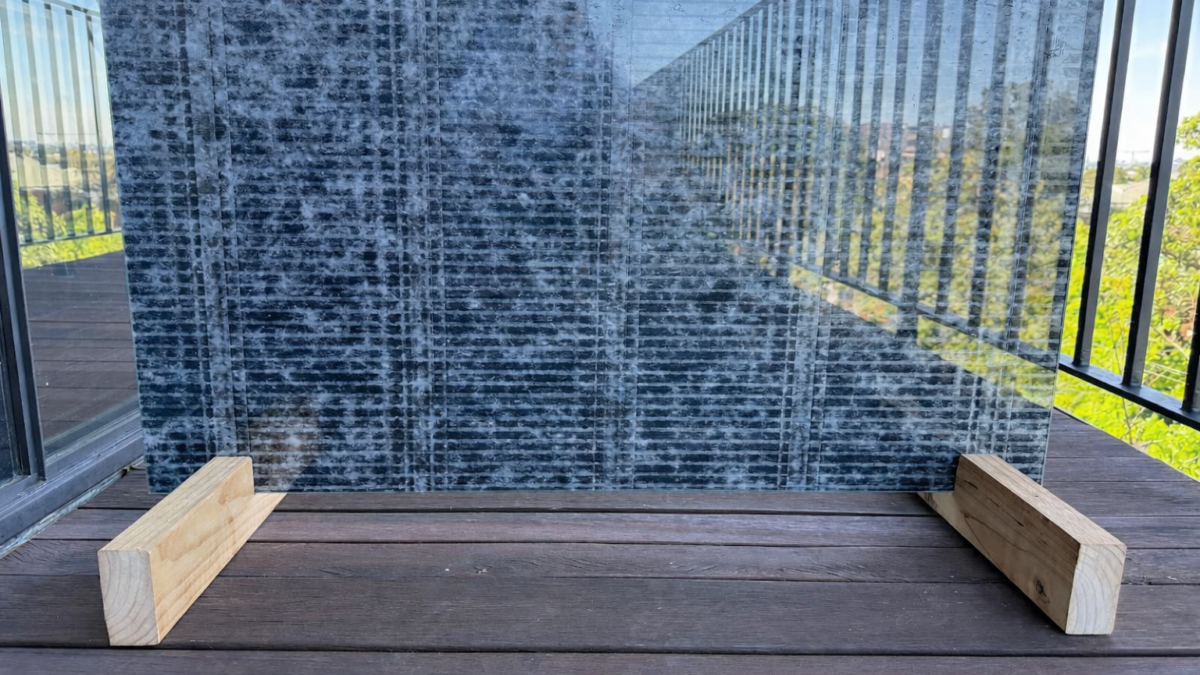
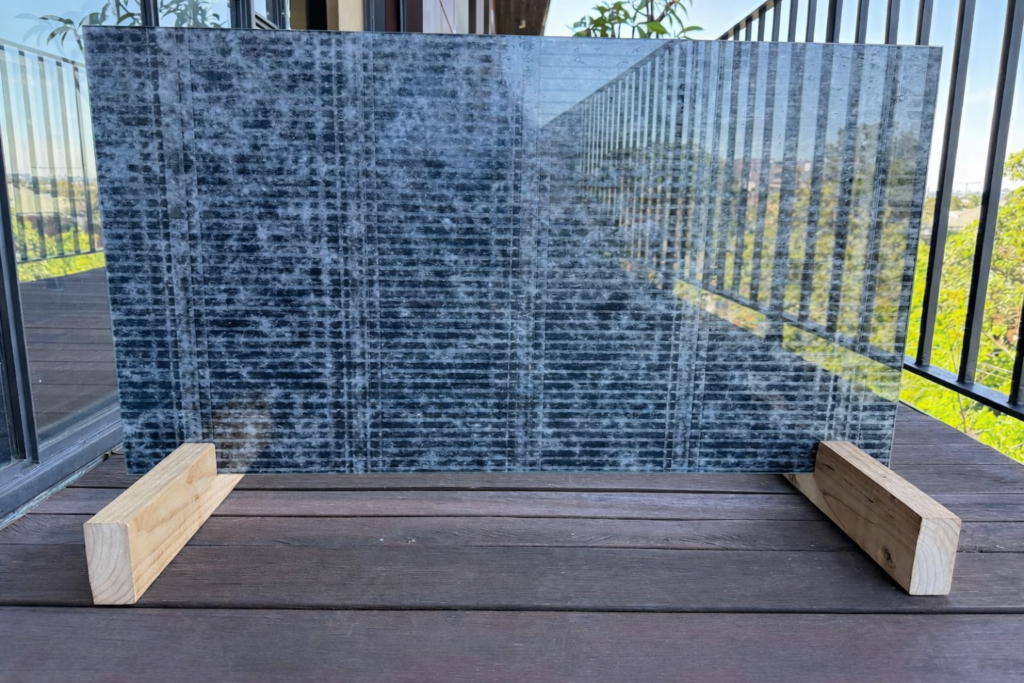
This is made possible by utilising Permavap® adhesion patterning. Permavap® applies a deep understanding of pressure-sensitive adhesive (PSA) design and adhesion geometry, delivering robust membrane to substrate bonding. By organising the SOLID®, non-water-based acrylic adhesive into discrete 10 mm adhesive strips separated by controlled voids of approximately 4 mm, displaced air can dissipate during mechanical pressure application using a PRESSFIX. This promotes contact between the adhesive and substrate across the active bonding zones.
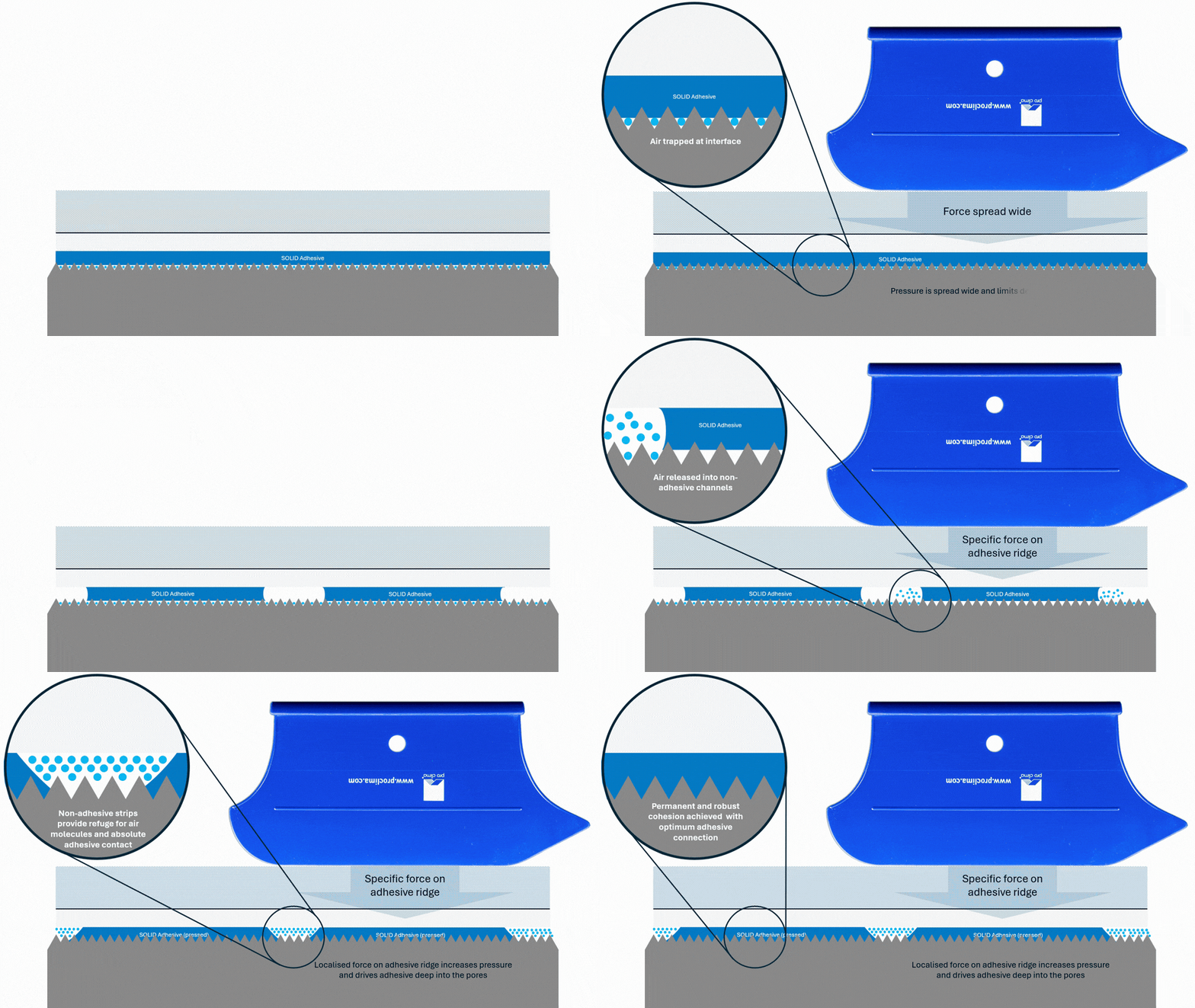
SOLITEX ADHERO® FC maintains the 180-day UV resistance and high-performance TEEE monolithic functional layer.
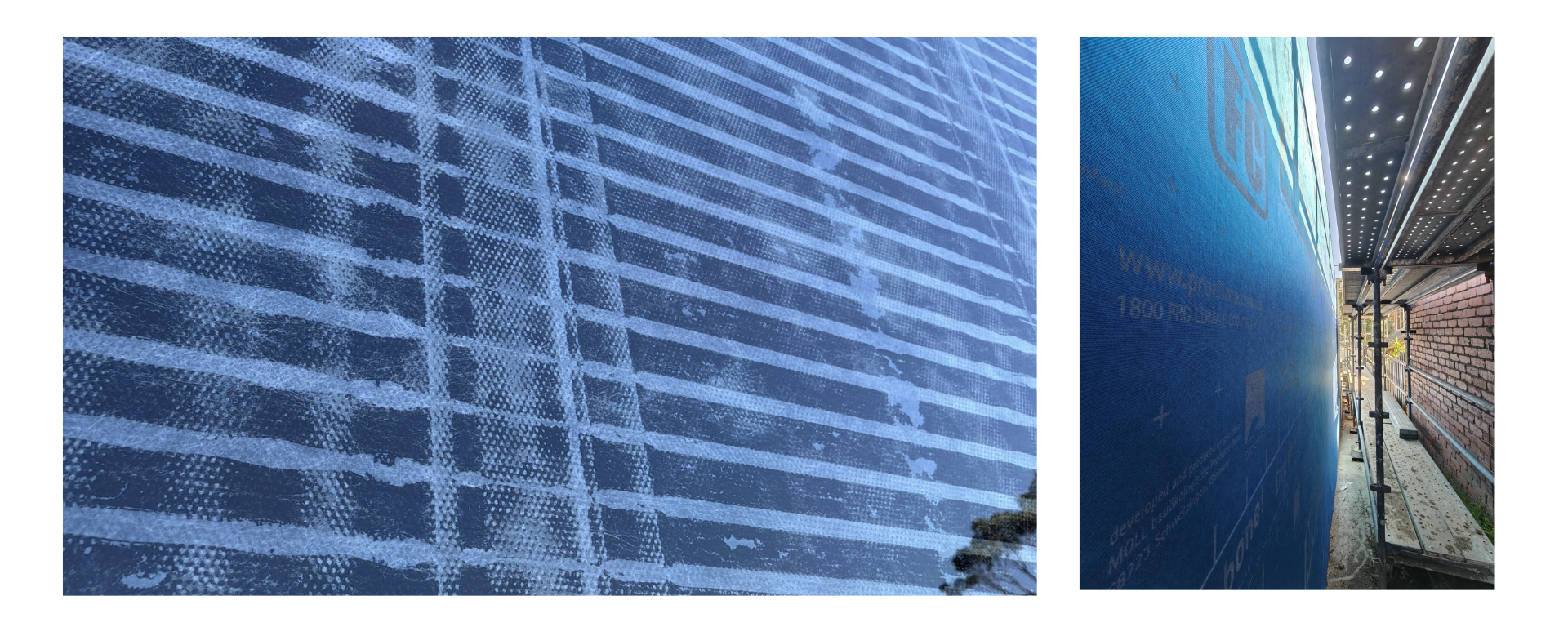
Figure 2 (a) Permavap® adhesion pattern (b) SOLITEX ADHERO FC weathertight façade.
Testing for the Truth
ASTM (American Society of Testing and Materials) D3330 Method F is a standard laboratory test used to quantify the peel adhesion strength of PSA membranes bonded to common construction substrates. This test is the industry standard for assessing adhesion strength. To test the theory of PSA physics and Permavap® strength, pro clima ran a series of ASTM D3330 Method F tests on a series of hydrophilic and hydrophobic cementitious substrates, as well as hydrophilic external grade gypsum substrates which are common in the structural envelope of modern façades.
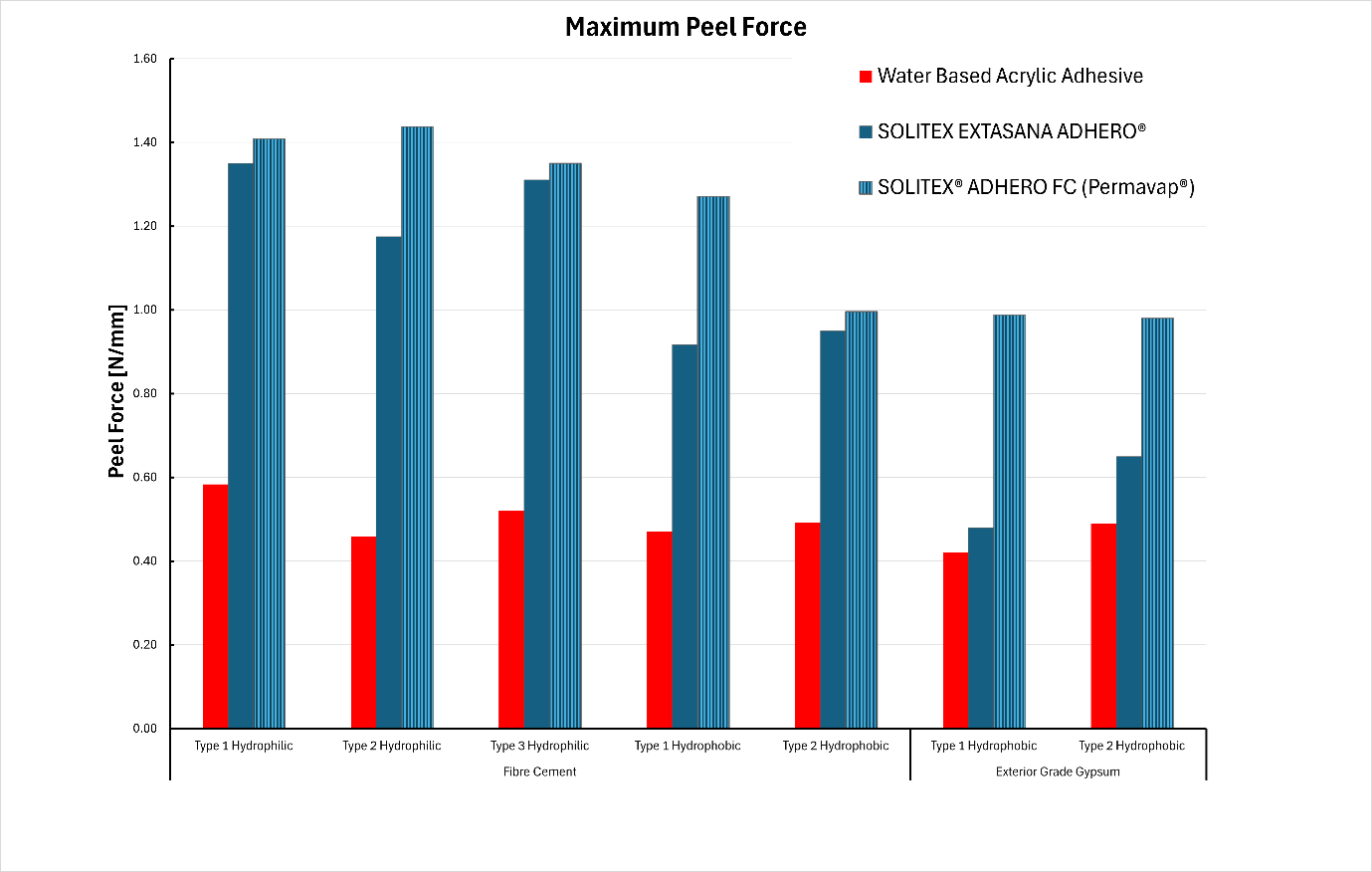
Figure 3 Permavap® delivers consistently stronger adhesion across both hydrophilic and hydrophobic façade substrate.
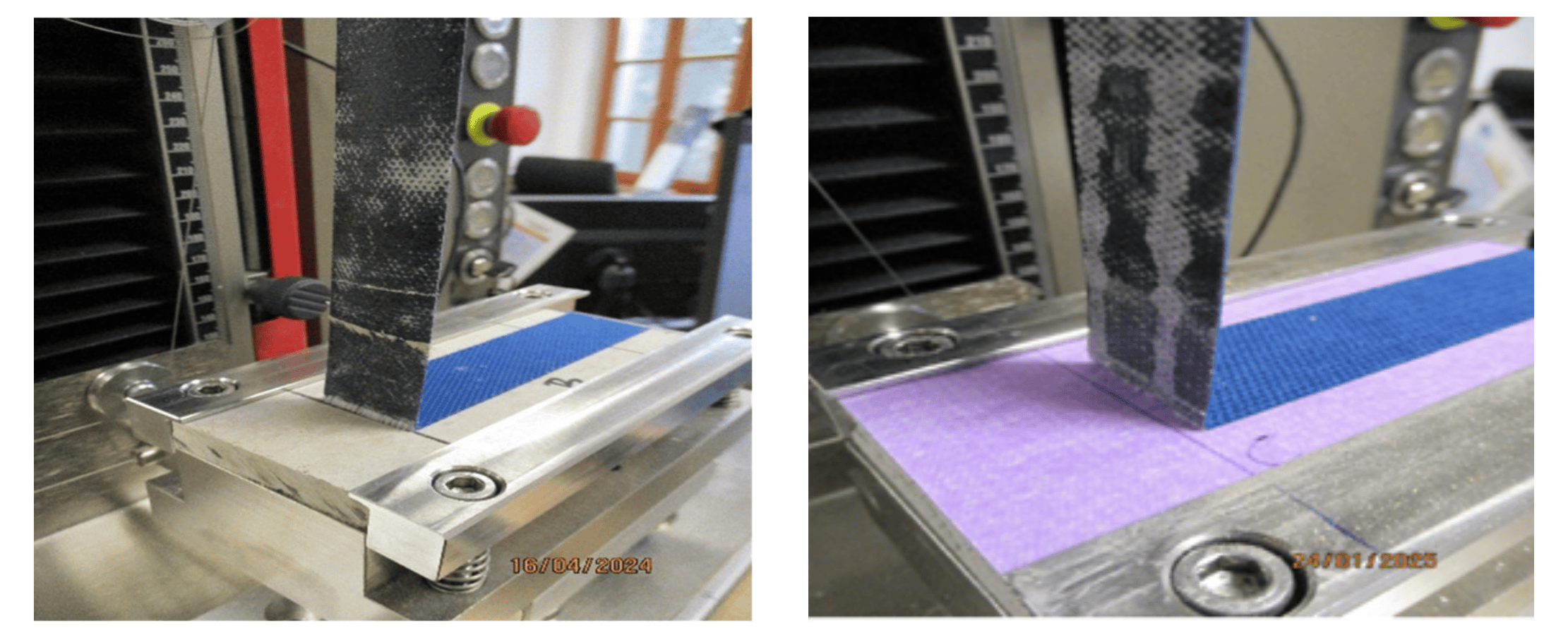
Figure 4 (a) SOLITEX EXTASANA ADHERO® ASTM D3330 Testing (b) SOLITEX ADHERO® FC ASTM D3330 Testing.
Permavap® adhesion displays up to three times the adhesion strength to water based acrylic adhesive WRBs. All PSA’s are shown in figure 3 to display higher adhesion strength to hydrophilic substrates. This is owed to the increased surface energy typical with hydrophilic surfaces.
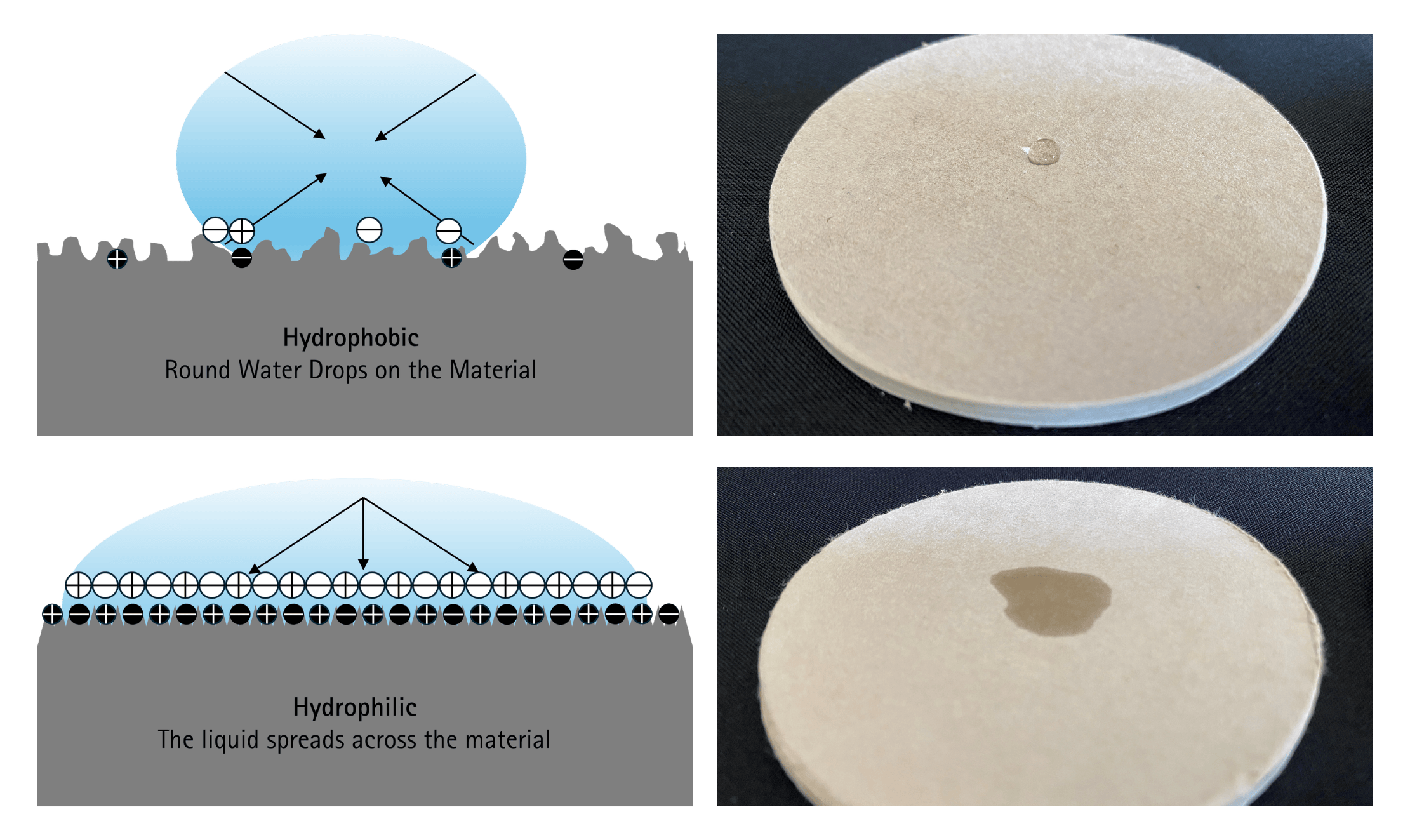
Figure 5 (top) Hydrophobic (Low surface energy) vs (bottom) Hydrophilic (High surface energy).
Low-energy surfaces have few attachment points and low surface tension. It cannot pull the water drop out of its shape. This indicates a surface that is more difficult to stick to.
Optimal condensation control considers the vapour permeability of the adhesive membranes including the rigid substrate they are stuck to. Hydrophobic substrates impregnated with water repellent additives tend to increase the vapour resistance of the board. This becomes a key design consideration for condensation control.
Contact pro clima for WUFI material files for simulations using Australian made hydrophobic and hydrophilic fibre cement materials in combination with SOLITEX ADHERO® FC or SOLITEX EXTASANA ADHERO®.
Ultimate Limit State (ULS)
AS 4040 is a suite of laboratory test methods used to assess the structural performance of building elements under simulated wind pressure, including positive and negative loads. It evaluates a component’s strength, stiffness, and serviceability when subjected to ultimate pressure conditions.
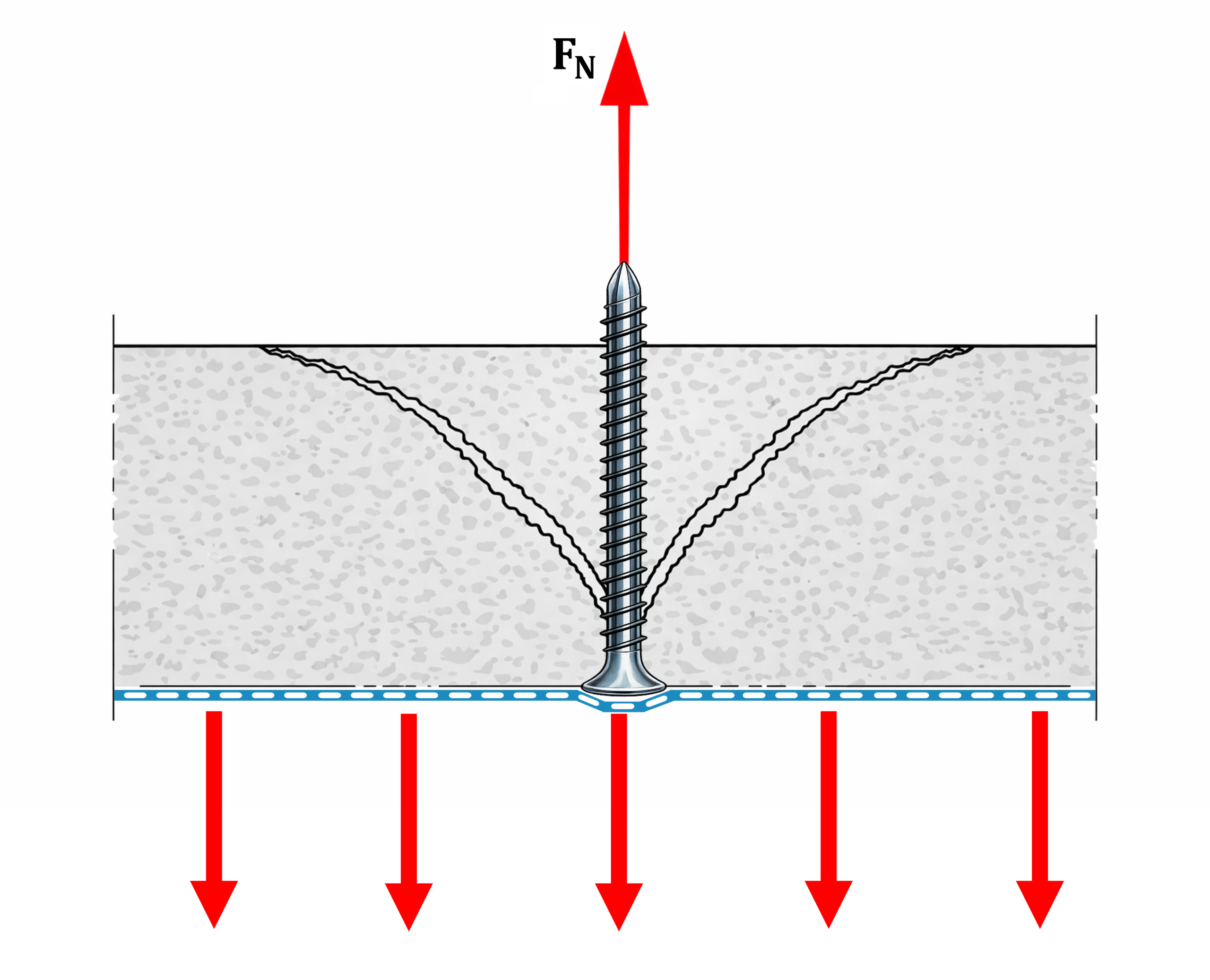
To test beyond the limitations and apply Permavap® technology to full scale environment, we tested in accordance to AS 4040.2 and turned the dial on negative pressure to – 6 kPa (Figure 6).
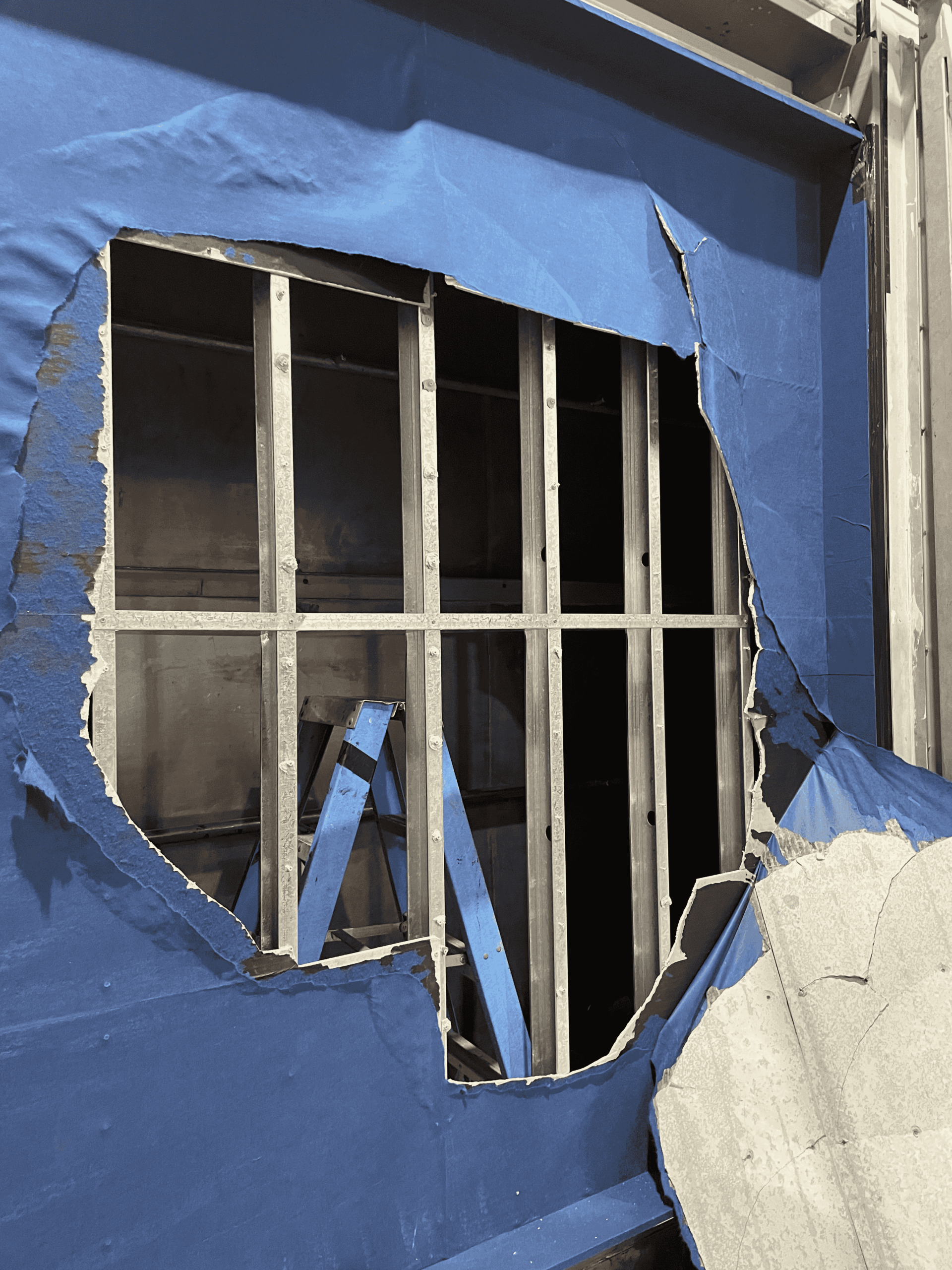
As can be seen there was a critical structural failure in the fibre cement board leading to cone failure of the boards before the membrane showed any sign of delamination from the substrate.
A System Based Approach
AS/NZS 4284 is a full-scale façade testing standard that assesses air infiltration, water penetration, and structural performance under simulated wind pressures and dynamic wetting and loading. It is used to verify the weatherproofing and pressure-equalisation performance of façade systems as installed, including junctions and interfaces.
Our new FORTX™ & FORTX™MELIOR façade systems incorporate Permavap® innovation and SOLITEX ADHERO® FC WRB technology, tested to the strict requirements of AS/NZS 4282. These systems sustain weathertight performance under pressures of ±3.5 kPa at Serviceability Limit State (SLS) and have remained securely bonded without delamination or separation at ±5.5 kPa Ultimate Limit State (ULS).
FORTX™ achieves weathertightness independent of the cladding. Giving engineers and architects the freedom to design aesthetic façades and the confidence to build structures of the future.
For more information or specific test reports reach out to support@proclima.com.au.
For more information on FOTX and FORTX MELOIR visit https://proclima.com.au/fortx/.
Authors